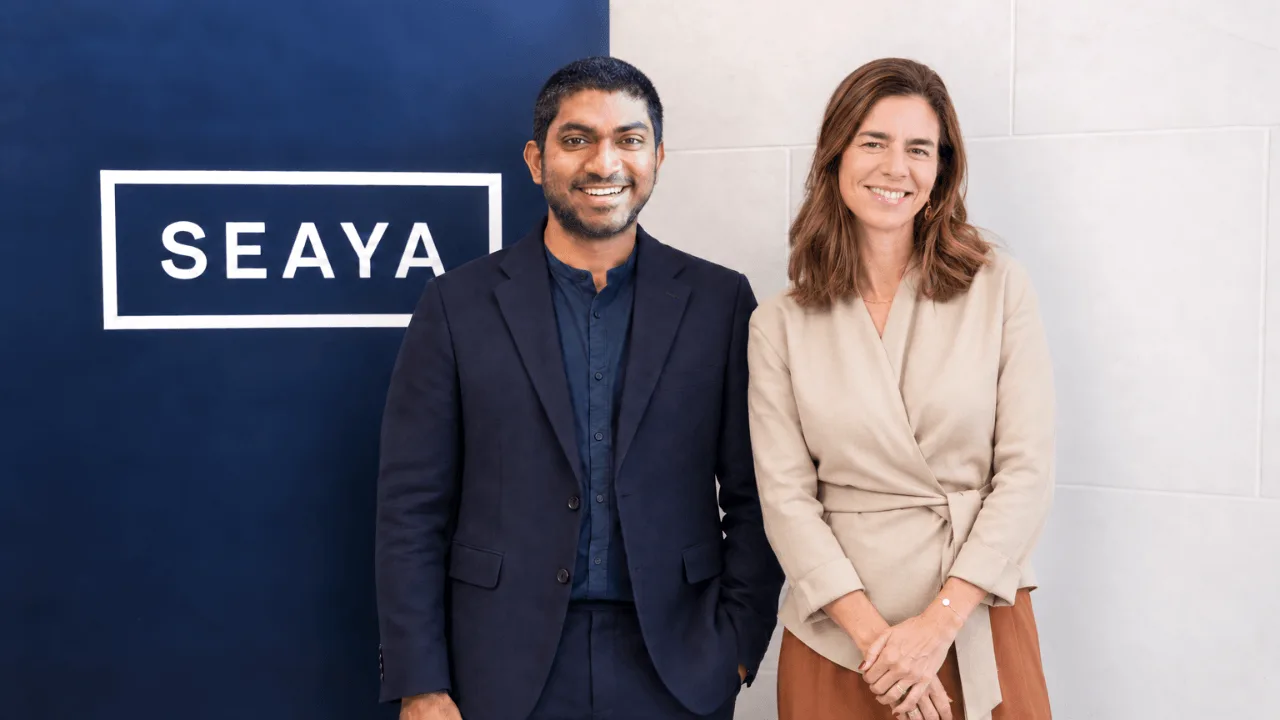
As a co-founder and Partner at Isomer Capital, Chris Wade is one of the key figures influencing the VC scene in Europe. With the portfolio spanning over 70 early-stage VC funds, Isomer also manages a £100 million secondaries fund, offering much-needed liquidity to the market.
In a conversation with Marcin Laczynski from Vestbee at the CEE VC Summit 2026, Wade shares his perspective on the industry, explains how secondary transactions are reshaping LP liquidity, and offers practical advice for fund managers on how to secure capital in today's demanding market.
There’s a lot of talk about an AI bubble right now. From your perspective, aren't you afraid it will be a bloodbath that impacts your portfolio and returns to investors? When the bubble bursts, won't it negatively impact market sentiment and dry up the money available for AI investments?
I don't think it will be a bloodbath. If you look at what European AI startups are actually doing and the specific part of the AI stack where they are spending their capital to develop technology, I think it holds great promise. I don't worry about the bubble bursting, and I'll tell you why: the companies that are going to create the highest returns are already financially independent of investors.
During our annual co-investment audit, I had a "holy shit moment". Usually, determining the valuation for our co-investments is a two-week process of gathering prior-year performance data, comparing projections to actuals, assessing market dynamics, and running valuation metrics.
This year, we gave all of that data to Claude. Designing the prompt took intellect, but 15 minutes later, it generated a beautiful 20-page audit report — beautiful in its logic and how it justified the company's valuation. That right there is the real opportunity of AI.
When you underwrite new funds today, are you still assuming the main exit route will be IPOs or M&A, or are you factoring in financial engineering to bring liquidity?
I don't love the term "financial engineering", but secondaries are truly growing up and becoming a fact of life. When I was building tech companies a long time ago, no VCs would allow me to sell some of the shares before the exit.
The old mindset was strict — investors get their money first, and then founders might get some. That dynamic has changed, largely because companies are reaching significant valuations and staying private much longer. Selling via secondaries is totally valid now. Just today, we received a distribution from Poland specifically because of a secondary transaction.
Are you actively encouraging the GPs you support to place more emphasis on secondaries?
Well, you know, "L" in LP stands for “Limited”. We can inform and suggest, but we aren't going to dictate what a GP should do. However, when we back pre-seed and seed funds that invest early — say, at a 10 million valuation — and those companies grow to be worth billions, the gain is so significant that it makes perfect sense to take a little bit of money off the table.
As an investor allocating across Europe, how do you evaluate exits and returns for funds from CEE compared to Western ecosystems? Are they on the same level, or is it a different reality depending on a fund's origin?
I would love the returns of all our funds across Europe to match what we're seeing, for example, in Poland. There are some outstanding companies here in the region, just as there are outstanding companies in the UK, France, and Germany. There is absolutely no sense that Central and Eastern Europe is lagging.
As the CEE is still somewhat stigmatized among Western LPs, how can GPs operating out of the region effectively market themselves to Western LPs to build a stronger brand?
There really is only one answer to that: it's all about returns. Before a startup has revenue, it might use marketing as a substitute to attract customers, but funds cannot do that — they must have really good returns.
The difference between an okay VC and a good VC is a deep understanding of fund management. It’s about knowing how to deploy LP capital and then figuring out how to get it back without harming the assets or the long-term multiple of the fund.
That is the fundamental job of a fund manager.
How do we educate local fund managers to adopt that mindset? We have seen examples of phenomenal returns, but since the CEE ecosystem is still relatively nascent and small, how do we bring that US-style operational knowledge here?
I’m not sure it’s entirely true that it's a completely different reality. When we benchmark our funds against Cambridge Associates data — which compares performance against the US pool of VCs — it is pretty impressive how European VCs consistently stand out above the 50% mark and in the upper quartiles.
As for educating emerging ecosystems, the real answer is to talk to the VCs who have already done it. We host an emerging VC managers conference in London twice a year, where we discuss secondaries, LP dynamics, and ask LPs like the EIF questions that GPs might not be able to ask individually.
The nice thing about the European venture capital industry is that people care and share.
Coming back to GPs, many small or first- and second-time fund managers are struggling. What advice can you give emerging managers on convincing LPs to bet on them rather than writing a ticket for a big, international VC?
Firstly, there is a distinct set of LPs who explicitly buy into the strategy that small funds are good. In our book, "emerging" means funds one through three, not just first-time funds, and those managers should be specifically targeting those types of LPs.
Based on our own fundraising experience, I have two pieces of advice:
- When you meet an LP, it's tempting to rush in and instantly pitch your thesis.
Instead, take a page from experienced fund six or seven managers. Say, "Good morning, how are you? What are you investing in right now? How are you thinking about European venture as an asset class?" — and then be quiet.
Many LPs aren't terribly comfortable answering that, but ask them anyway. Time is the scarcest resource in our industry. You should only spend that precious resource with LPs who are interested in your asset class, have capital, and want to deploy it within your fund's timeline.
- The second piece of advice is to have the guts to ask for the close.
It took me a long time to get comfortable with this, but you have to ask, "Are you going to invest?" and get a definitive answer. We hate asking because we fear the answer, but it’s just a simple sales process, and an awful lot of funds fail to do it.
What about relationship and trust building? Unless you are a massive brand, no one is going to invest after the first meeting. What is the best way to build that relationship?
Having a CRM system is crucial. If you haven't spoken to an LP for two months, ping them an email to say hello. There’s a common complaint among LPs that GPs only show up when they want money. While that's technically what we're here to do, it is incredibly valuable to reach out when you are not fundraising.
If a GP says, "Hey, I'm in town, can I just come say hello and give you an update on what we're thinking for the next 12 months? Don't worry, I'm not fundraising right now, so I won't ask you a nasty question at the end," it completely changes the dynamic. It turns into a friendly, constructive, two-way conversation.
We used to complain in Europe about the lack of ex-builders and entrepreneurs moving into venture. Are you still seeing mostly people with banking and consulting backgrounds, or is that changing?
It is absolutely changing. Many more operators are doing VC today, and we also see VCs from big firms spinning out to start their own funds, which should be encouraged. However, I want to add a caveat about the operator dynamics.
While it is valuable to empathize with the entrepreneur you're investing in, I have seen too many instances — particularly with US funds, but some in Europe too — where the VC tries to live their entrepreneurial life through the founder. It really isn't their company; their job is to be an investor and offer advice.
You have a separate secondary fund. How does that mix with your core fund-of-funds strategy? Do you limit it to the ecosystem of GPs you already work with?
In our primary fund-of-funds, 15% of capital goes into secondaries. It is strictly reserved for our existing GPs, acting as a function to help them out — for instance, if they have a 10-year-old fund with a couple of grumpy LPs who want out, we can provide a solution.
However, around 2022 and 2023, we noticed that secondary deal flow was becoming massive, driven by LPs desperately wanting DPI. So, we launched our own £100 million secondary fund. We have no restrictions on where we can deploy that capital, as long as it's in Europe. It can be deployed into any VC, any company, or to purchase founder shares.
This allows us to buy into VCs we’ve loved for a decade but couldn't previously back due to timing or capital constraints.