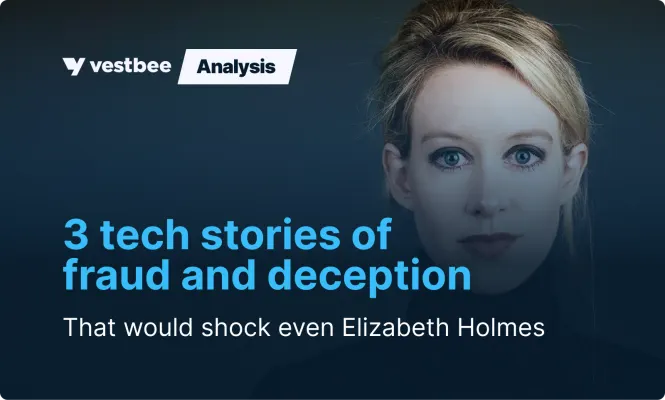

There seems to be no end to public fascination with high-profile fraudsters and scam artists, with Elizabeth Holmes arguably the most famous in recent years. Her story has already inspired a book, an HBO documentary, and a limited series, and there is more to come: a new film, titled You Can See Everything, by Nathan Fielder and Lance Oppenheim focusing on the period before she reported to prison.
Following its secret premiere at Telluride, The Wall Street Journal’s Kyle Smith wrote that "this film promises to be the talk of the fall". Clearly, the appetite for stories of fraud remains as strong as ever.
We decided to take a closer look at the European startup ecosystem: do we have a European Elizabeth Holmes? While Europe’s startup scene may have fewer founders already envisioning a Hollywood feature about themselves, it certainly has no shortage of spectacular startup and venture fraud cases.
Here are three stories worthy of corporate and espionage thrillers: Wirecard, a DAX-listed fintech with €1.9 billion that never existed; Ruja Ignatova, the "Cryptoqueen" who vanished at the height of her scheme; and Builder.ai, an AI unicorn whose revenue estimate was reportedly slashed by three-quarters.
Wirecard: The "Steve Jobs of the Alps" and Europe's €1.9 billion fintech fraud
Wirecard was founded in a Munich suburb in 1999, at the height of the first internet boom. By 2005, it reached the stock market by taking over the listing of a failed call-center company, but according to the FT's timeline, the core of its business at that time was processing payments for online gambling and pornography.
Markus Braun had been the company’s CEO since 2002 and had bigger ambitions for the venture — under his leadership, Wirecard rebranded itself as a global fintech, with card issuing, merchant payments, and a bank of its own. Investors bought into the story, and by 2018 the company was valued at €24 billion, making it more valuable than Deutsche Bank and securing a place in the DAX, Germany’s leading blue-chip stock market index.
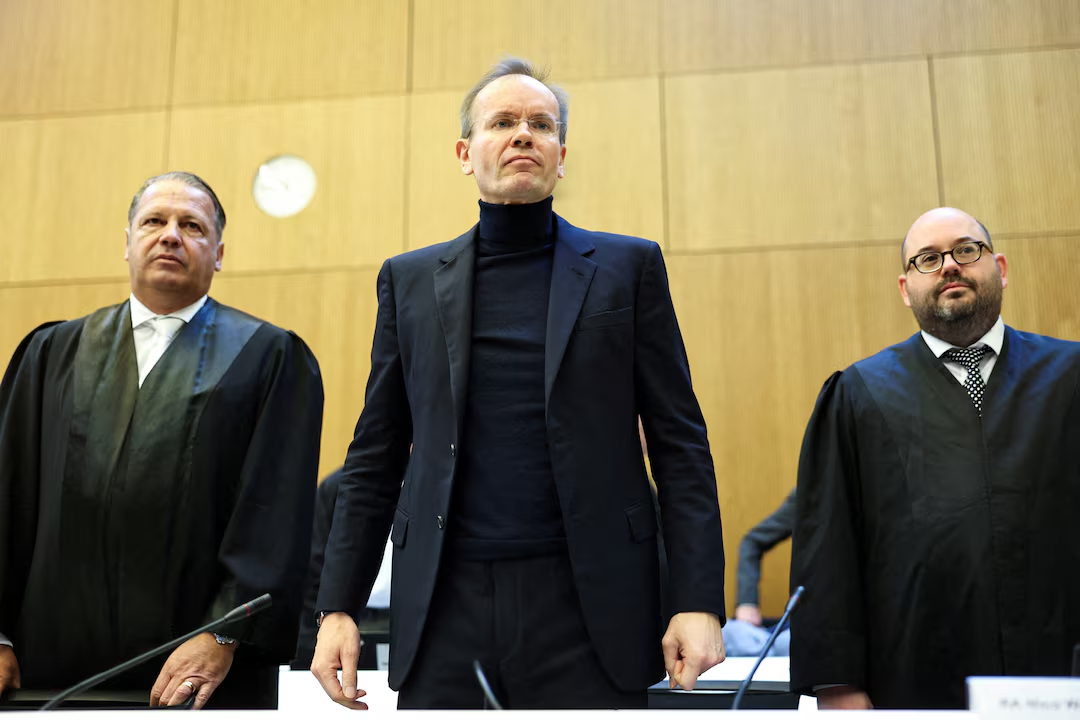
Braun cultivated an image to match. Often seen in a black turtleneck, he was likened to the “Steve Jobs of the Alps,” as journalist Lena Kampf told Swiss broadcaster SRF. For years, the company’s growth appeared to validate that image. Behind the scenes, however, questions about its accounts were already mounting.
Financial Times journalist Dan McCrum began scrutinising Wirecard’s accounts in April 2015, publishing a post titled “The House of Wirecard”. His reporting raised questions about the company’s business model and the credibility of its financial statements, but Wirecard repeatedly rejected the allegations, and despite the media speculation, many investors continued to back the company.
The scandal escalated in 2019, when the FT reported that a senior executive in Wirecard’s Asia-Pacific business was suspected of using forged and backdated contracts. Wirecard dismissed the reporting as “false, inaccurate, misleading and defamatory”. Germany’s financial regulator, BaFin, also came under criticism for its response. In February 2019, it imposed an unprecedented ban on short selling Wirecard shares and later filed criminal complaints against McCrum and his colleagues. The move turned the spotlight onto the journalists investigating the company rather than the company itself.
Munich prosecutors eventually dropped the case against the FT journalists in September 2020, describing their reporting as “fundamentally accurate”. McCrum later told Press Gazette that, at one point, he had genuinely feared being arrested and briefly ending up in a German prison cell.
Wirecard’s critics had spent years trying to establish what was wrong with its accounts. In 2020, the company finally began to unravel. A special audit by KPMG had been unable to verify key business arrangements underpinning much of Wirecard’s reported profits between 2016 and 2018. Then EY, the company’s auditor, refused to sign off on its 2019 accounts. On 18 June 2020, Wirecard admitted that there was a “prevailing likelihood” that €1.9 billion supposedly held in trustee accounts did not exist.
Four days later, CEO Braun resigned and was arrested. On 25 June, Wirecard filed for insolvency, becoming the first DAX-listed company to do so. The collapse exposed a massive accounting fraud and raised serious questions about the auditors, regulators and financial institutions that had failed to identify or act on the warning signs. “It’s a complete disaster we’re looking at,” BaFin president Felix Hufeld told Bloomberg.
The more intriguing person in this whole story is Jan Marsalek, Wirecard’s former COO, who disappeared in 2020, reportedly leaving Austria in a private jet heading towards Minsk. Subsequent reporting by outlets such as The Insider, Der Spiegel, ZDF and Der Standard has uncovered evidence of his longstanding ties to Russian intelligence, working for the domestic security and intelligence agency of the Russian Federation, and that he now lives in Moscow under an assumed identity. In 2025, a ring of six Bulgarians who worked for Marsalek were jailed in London for actual espionage for the Russian state.
OneCoin: The missing “Cryptoqueen” behind a $4 billion crypto scam
On a June evening in 2026, Ruja Ignatova walked onto the stage at London’s Wembley Arena in a red gown, ready to tell the 3,000 people gathered there all about her idea that was supposed to revolutionize the future of money. Her pitch was very compelling: her cryptocurrency, OneCoin, was going to kill Bitcoin. It was a performance worthy of a pop star, as well as part of one of the largest alleged cryptocurrency frauds in history.
Born in Bulgaria in 1980, Ignatova spent part of her childhood in Schramberg, southern Germany. She earned a doctorate from the University of Konstanz in 2005 and was said to have studied at Oxford and worked at McKinsey. In 2014, she co-founded OneCoin in Sofia with promoter Sebastian Greenwood, setting out to build a cryptocurrency that could rival Bitcoin.
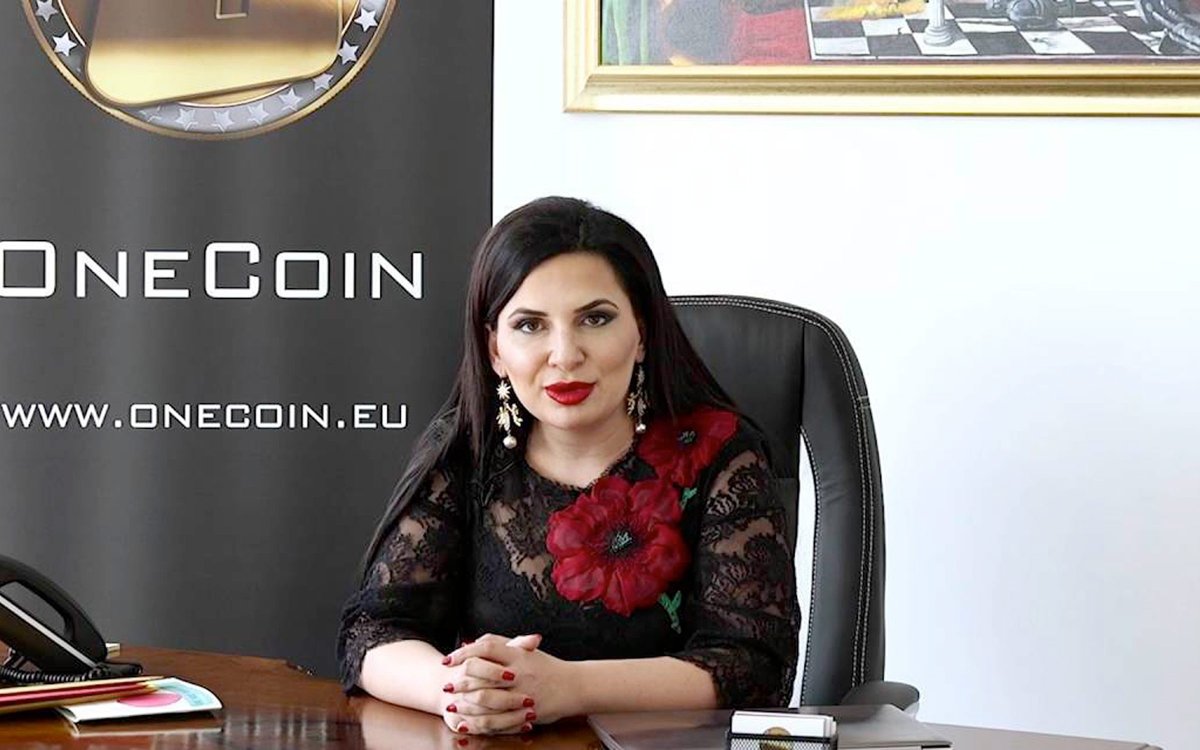
The business model was simple enough to sell to almost anyone — customers bought “educational” packages ranging from €140 to €118,000, which came with tokens that could generate OneCoins. The company relied on multi-level marketing, rewarding members for bringing in new buyers. Its pitch was that OneCoin was the next big thing in crypto, and that getting in early meant getting rich. It was all too good to be true; the numbers didn’t seem to match, and most surprisingly — there was no technology that could back OneCoin’s activities.
According to the US Department of Justice, OneCoin set the price of its own currency, which rose from €0.50 to around €29.95 without a genuine market determining its value. More fundamentally, as prosecutors later said, OneCoin had no real blockchain: no public, independently verifiable record of transactions underpinning the supposed cryptocurrency.
Suspicion around OneCoin began in 2014, when the watchdog blog BehindMLM called it a Ponzi scheme. But these early warnings struggled to compete with the promise of easy money, the spectacle of Ignatova’s public appearances, and a sales network built around personal trust that aimed to bring more and more people to OneCoin. By 2016, the company’s technological foundations were drawing attention from people who knew what a blockchain was supposed to look like.
Norwegian crypto expert Bjørn Bjercke was approached by a recruiter about taking a senior technology role at OneCoin. As he later told the BBC, the recruiter’s explanation was remarkable: “Well, first of all, they need a blockchain. They don't have a blockchain today”. For an alleged cryptocurrency company, they really had no cryptocurrency to speak of. Meanwhile, ordinary investors were putting their savings into the scheme and persuading friends and relatives to do the same.
The most damning evidence, however, would come from inside the company itself — in emails cited by US prosecutors, Ignatova and Greenwood discussed an “exit strategy" out of OneCoin, and their solution was to: “Take the money and run and blame someone else for this”.
In August 2015, after a burst of sales, Ignatova reportedly wrote to Greenwood about “1.3 [billion] fake coins”. By October 2017, the scheme was approaching its most consequential turning point. Ignatova failed to appear at a scheduled OneCoin event in Lisbon on October 7. Five days later, a US federal arrest warrant was issued. On October 25, she boarded a Ryanair flight from Sofia to Athens — and disappeared.
She has not been seen since. For someone who had spent years cultivating a conspicuous public image, the disappearance was extraordinary. There was no confirmed sighting, no public explanation, and no clear account of what had happened to her. The woman who had promised to revolutionise money seemed to have vanished along with the fortune built around her.
In June 2022, the FBI added Ignatova to its Ten Most Wanted Fugitives list. Two years later, the US government increased its reward for information leading to her arrest or conviction to $5 million. The question of where Ignatova went has produced a stream of theories, but no definitive answer, and none of them has been confirmed. Ignatova’s whereabouts remain unknown.
What we know is the scale of the damage she created — according to the US Department of Justice, OneCoin took more than $4 billion from at least 3.5 million victims between late 2014 and late 2016 alone. The supposed coins were ultimately worthless, leaving investors with losses and little prospect of recovering their money. Several of the people who helped build the operation have since faced justice. Greenwood was sentenced to 20 years in prison. Mark Scott, a lawyer who helped launder approximately $400 million in OneCoin proceeds, received a 10-year sentence.
For the wider public, much of the story has been kept alive by The Missing Cryptoqueen, Jamie Bartlett’s 2019 BBC podcast, which followed the trail of OneCoin and the people left behind.
What is AI washing? The Builder.ai collapse explained
AI washing is the artificial intelligence equivalent of greenwashing — making a product or company appear more technologically advanced than it really is. Law firm Herbert Smith Freehills defines it as exaggerating “the capabilities of a product or service” by labelling it as AI. Interestingly, this practice predates the current GenAI boom. In 2019, MMC Ventures analysed 2,830 European companies classified as AI firms and found that 40% showed “little evidence of AI”. The label was already attracting investors, even when the underlying technology was difficult to identify.
Regulators have since begun treating misleading AI claims as a potential form of fraud. In March 2024, the US Securities and Exchange Commission settled its first AI-washing cases against two investment advisers — Delphia and Global Predictions. “We've seen time and again that when new technologies come along, they can create buzz from investors as well as false claims by those purporting to use those new technologies,” said then-SEC chair Gary Gensler.
A more recent case involves Nate, a US shopping app whose founder, Albert Saniger, was charged in April 2025 with allegedly raising more than $40 million by promising AI-powered checkout. According to prosecutors, the app’s actual automation rate was “effectively zero percent”, as the orders were allegedly completed by hundreds of contractors in a call centre in the Philippines.
The challenge is that the line between legitimate AI marketing and misleading claims can be difficult to draw. A company can use AI and still overstate what the technology achieves. Builder.ai, a London startup once valued at around $1.5 billion, became a prominent example of how those questions can collide with a much bigger business failure.
Founded in London in 2016 by Sachin Dev Duggal, originally under the name Engineer.ai, Builder.ai promised to make software development “as easy as ordering a pizza.”
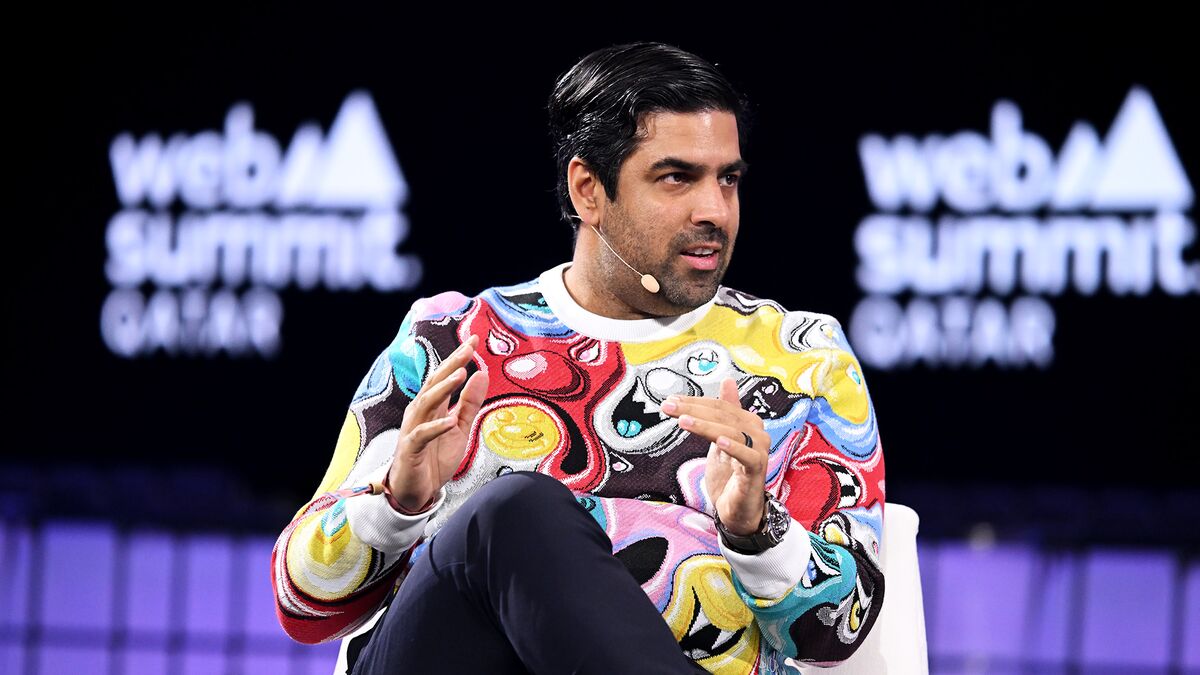
Customers could use an AI assistant called Natasha to guide them through building an app, without needing to understand the technical work behind it. Duggal's own title was “Chief Wizard”, a fitting label for a founder selling the idea that software development could become almost effortless.
And investors loved it. Builder.ai raised more than $450 million, including a $250 million Series D led by the Qatar Investment Authority in May 2023. That same month, Microsoft made an undisclosed equity investment and brought Natasha to Teams users.
The early warnings that some things in Builder.ai are not the way they seem came in 2019, when the Wall Street Journal reported that Builder.ai relied on human engineers in India and elsewhere to carry out much of the work presented as automated. The company's former chief business officer, Robert Holdheim, had also filed a wrongful-termination lawsuit alleging that its technology was “nothing more than smoke and mirrors”, but the company kept growing anyway.
In February 2025, Duggal stepped down as CEO, and with a new boss came a new review of the company’s financials — and in a surprising finding, Builder.ai's estimated revenue for 2024 had been revised down from $220 million to approximately $55 million. In May 2025, the situation deteriorated further when lender Viola Credit seized $37 million, reportedly leaving Builder.ai with around $5 million. The company said it was “unable to recover from historic challenges and past decisions” and entered insolvency proceedings, plummeting from unicorn status towards bankruptcy.
The financial questions did not end with insolvency. Bloomberg reported that Builder.ai and VerSe Innovation, the Indian social-media company behind Dailyhunt, had routinely billed each other for roughly similar amounts between 2021 and 2024. Such arrangements, if used to record transactions that did not reflect genuine independent demand, could have inflated reported sales. The matter also attracted the attention of US authorities. Prosecutors in New York requested Builder.ai's financial statements and customer list, and in August 2025 FBI agents served a subpoena on the company's former finance chief concerning communications with its auditor. As of October 2026, no charges had been publicly reported in connection with the investigation.
But did Builder.AI actually fake its technology?
The viral claim that behind the company's AI were real humans working overtime to satisfy the demand has been largely proven untrue — Gergely Orosz of The Pragmatic Engineer, drawing on accounts from former employees, argued that Builder.ai had not faked AI with a workforce of 700 people, but instead its agent Natasha used large language models, including Claude and ChatGPT, alongside human input.
That does not settle every question about how Builder.ai marketed its technology or how much work its systems could perform independently. The company did use AI; the more difficult question was how its technology, human workforce and business model fitted together, and whether its public claims accurately reflected that combination.
Duggal has defended Builder.ai's approach, pointing to its “publicly known hybrid architecture,” which included not only AI but also humans in the loop. In August 2026, he returned to the startup scene with a new venture, SeKondBrain. “There were mistakes made, built too fast, built too much. There's a lot of water under the bridge,” he told Pathfounders.
How popular is venture fraud worldwide?
Every pitch deck sells a future that doesn't exist yet, but the line is crossed when the founder knowingly misrepresents the present: the revenue, the company’s customers, or existing technology.
A 2026 study of US startups found that 1.75% of US VC-backed firms founded since 2000 that raised at least $10 million had been involved in detected fraud. The rate of ongoing fraud rose from 0.10% in 2003 to 0.63% in 2021, and startups with founder-controlled boards were twice as likely to commit fraud.
Researchers from Imperial College and Emlyon describe the process as "façading": it starts with overstating performance, moves on to fake contracts and invoices, and ends with misrepresenting the technology itself. "Fraud is much more common and normalized in the startup world than we are ready to admit and accept," reported TechCrunch.