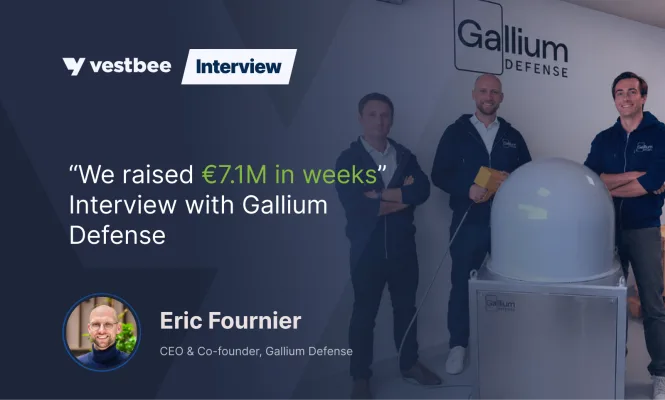

Paris-based Gallium Defense has recently announced the raise of €7.1 million seed funding round led by Keen Venture Partners and 360 Capital.
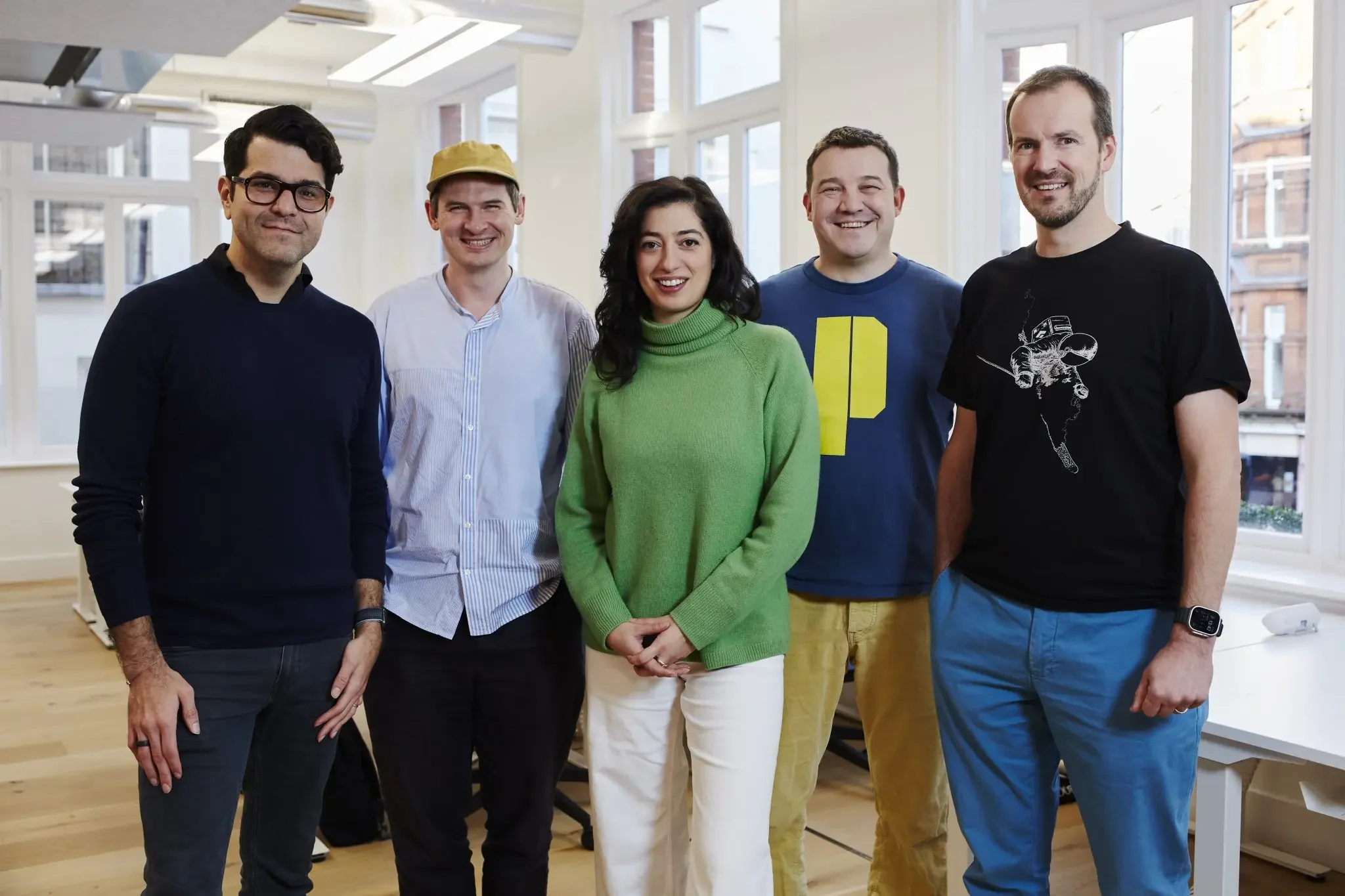
The company was founded in April 2026 by Eric Fournier, Robin Mandel, and Florian Lemoine, with General Philippe Lavigne as an advisor. Their bet is to build drone-detection radar from mass-produced telecom and photonics components, at a fraction of today's cost.
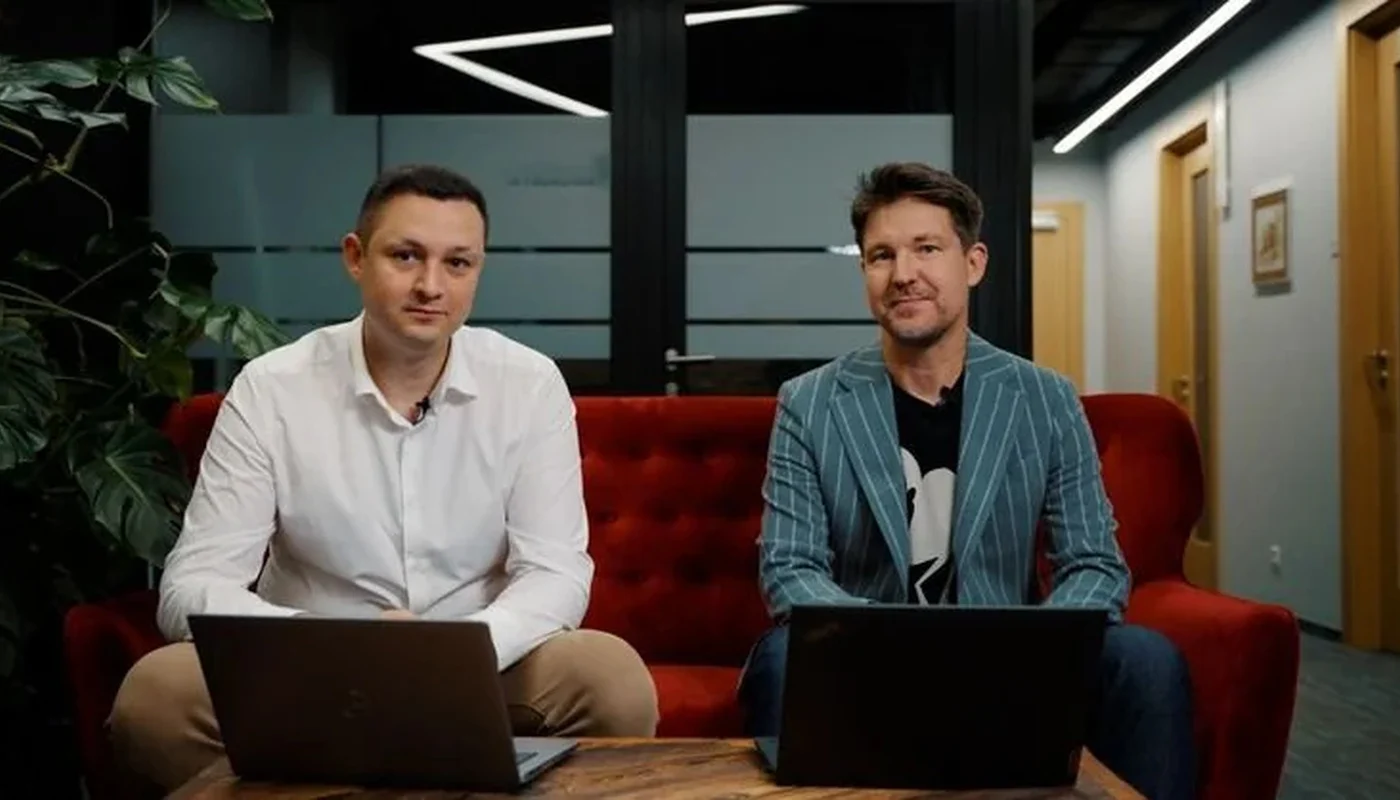
We spoke with Eric about Europe's air defence gap, raising a round in weeks, and why he thinks civil infrastructure will become Gallium's biggest market.
What problem is Gallium Defense solving?
When you look at NATO countries and allied nations, one of the biggest capability gaps is air defence. It was like that before the war in Ukraine, and in Europe it's even worse now, especially with the conflicts in the Middle East adding to the lack of munitions. The difficulty is that in Europe we've tended to build elegant, very exquisite systems that are very expensive, and there are too many infrastructure sites and military units to protect at such a high price per unit.
To give you an idea, a radar today costs several million euros per unit if you really want to detect drones at an adequate range. Yet 80% of military units cost less than €2 million themselves. Nobody buys a radar to protect a €2 million asset when the radar costs €2 million. It doesn't make sense.
So we set out to disrupt the economics of these radars, and to make them, as we say in France, democratised — affordable at mass scale and easy to deploy.
How did you bring the cost of the radars down?
In telecoms and photonics, you find components that are very close to radar components but far cheaper, because they're mass-produced in gallium foundries that are, in fact, much more modern. So we started from the components. We took off-the-shelf parts from telecoms and 5G antennas, typically gallium amplifiers, and systems-on-chip from photonics, without changing anything, and asked: does it work? And it works.
We ended up with an antenna that is ten times cheaper than a normal one. Our price won't be ten times lower, because we had to invest heavily in edge computing to make this antenna work: we multiplied the computing power on board by 100, and that has a cost. It's a starting point, and I'm sure we can do more.
You position yourselves as a dual-use company. What does that mean in practice?
Robin, Florian, and I all come from the defence world, so we knew what the NATO capability gap was that we wanted to address, but from my viewpoint, if you really want to protect nations, the army alone can't do it at this scale. To give you an order of magnitude: last year, the French army bought 15 radars with adequate capabilities. That's great for protecting air bases, and France has seven air bases that really matter.
But if you look at vital civil infrastructure, like energy networks and water treatment facilities, France has more than 1,500 sites. Germany has 30,000. So even setting aside the NATO capability gap, which is already enormous, there is a civil gap. Protecting against drone threats isn't just about protecting a few bases. If you want to be resilient as a nation, it's a civil challenge too.
That's what we call dual. Historically, I think "dual" was a bit of a cover word: you did defence but didn't want to look too much like defence, so you said, "actually I'm dual-use." For us, that's not the case — a big chunk of our market will end up being civil infrastructure, even if it's zero today. The need for protection of those crucial sites isn’t clear to people yet, and our starting point right now is military.
Gallium Defense closed a round soon after it was founded in April. How did you move so fast?
From our viewpoint, it's not fast enough, as there's a real sense of urgency in this market. But a few things can explain the speed.
Firstly, the team together has more than a century of radio-frequency experience. We're not in a garage trying to invent something new — there are 15 people behind me, and if you ask them to build a radar antenna, they'll build a good one in five days. That's not impossible for someone who has done it for 20 years. We're not youngsters.
Secondly, we didn't really start in April. That's when we incorporated, but we were working on our radars way before that. We wanted to avoid being one more of the many radars in this segment that don't deliver. It's very easy to say, "I'm going to do great stuff," and then disappear.
We built a reduced-scale version of our radar on our own and demonstrated its performance in a lab in December last year. On that basis, we knew it would work. It took time to get the storytelling right — we’re not inventing something new; we built a Frankenstein that works, and now we want to industrialise it. So: we incorporated in April, signed the term sheet in May, got the money in June, and started working. From June to October, we produced two antennas, so we could demonstrate our performance outdoors.
We wanted to prove that before the reveal. Just before the announcement, we detected a DJI drone at 7.5 kilometres, at a one-degree angle above the ground, which is the toughest possible condition. We were very confident: even if there's still work to do, our radars are detecting drones, not in a theoretical lab simulation, but for real. So we said, now we can reveal it. Our VCs were excited, so we took the opportunity of European Defence Week and made it happen.
Was it hard to get investors excited about radars?
At the start, we considered doing it alone, because we knew our story wasn't sexy.
Most of the time, people said, "Radar? Nobody cares." But we found VCs who got excited once we explained the logic.
We're really in an execution game: we want to reach mass at European scale first, and global scale in the end. It might sound strange, but think of Intel: an Intel chip is inside every computer. We want a Gallium radar inside every command-and-control system in the world.
When we started talking about that scale, VCs got interested, because they saw the billions of euros that can justify the risk they take.
How was the pitching process like, and what would you tell founders who are gearing up for their next round?
You need to know the people you want to work with. When we started, we didn't know a thing about VCs, so we pitched the big names a bit randomly. It was a complete waste of time.
Then we asked ourselves: who are the people we really value in this sector? You need to build personal connections with just a few people, and then when you talk to them, you can say: we're going to build something strong together. I understand what you value, you understand what I value, and we connect. Even then, our story was hard for VCs, because we want to be a supplier, not an OEM.
But Keen Ventures recognised the value of that, and then suddenly everybody aligned. 360 Capital joined with great energy, structured the term-sheet discussion and made it work in the French regulatory environment. Omnes and Polytechnique Ventures followed in a few hours of discussion, and it was done.
Things moved fast once I stopped pitching without understanding what investors value and focused on the few people I actually wanted to work with. I had a list of about 90 VCs I liked.
When Keen said, “I’m in,” I showed them the list, asked which ones they liked, and talked to those. It’s a very personal effort; otherwise it doesn’t work. 360 Capital had a great experience with Keen, so they were my top choice. I told them, “Guys, I really want you,” and it worked.
€7.1M round is lean for hardware. What are your plans for the next financing?
I agree, and it was a deliberate choice. We’re in an execution play, so we built our cost structure to survive on this round. I think we needed two products from the start, but we’re building just one, and it has to be good and sell at an adequate margin. In a perfect scenario, we’d never need to raise again and would move on to the second product step by step.
Realistically, though, another round is highly probable, for one of two reasons. Either things won’t go perfectly, and we’ll need more runway, because the valley of despair is real for startups. Or maybe traction will be so strong that we will need to industrialise faster than we can pay for alone.
If demand takes off, a Series A focused on industrial scaleup, such as a plant or production lines in several countries, would make sense. We’re not there yet. For now, the focus is delivering on our promise and surviving the valley of despair. But there’s a high probability we raise a Series A in 2027.
Where are you today then?
We’re pre-revenue and still developing our first product, so it isn’t yet on the market, and the price isn’t final. We have one signed contract and five MOUs, all military for now. In 2027, we aim to grow to around 20 key customers and deliver 13 to 15 units, but that’s still very small. The big takeoff, with hundreds of radars, is aimed at 2028.
Jumbo deals take time, especially in defence: nine months to close one is already really fast, and I hope civil will move quicker. We’ll start commercial discussions in earnest in April 2027.
Who are your customers and how does a newcomer like you reach them?
Europe’s defence space has great nations and big companies, so aiming big doesn’t mean thousands of customers. It means a few major customers doing jumbo deals. It’s less about mass selling and more about a strong value proposition for big integrators like Safran, KNDS, Rheinmetall, Hensoldt, Thales and MBDA, all of which can be transformative.
It’s the same with defence ministries. Germany, Poland and the Netherlands are very serious about radar, and France and the UK regularly sign deals worth hundreds of millions to equip entire fleets or sets of bases. The civil side is no different.
The radar market in Europe seems to be crowded. How do you win trust while pre-revenue?
Actually, I see it differently: at Gallium we’re facing a white space. Most buyers I talk to say, “If I have to buy a radar today, it’s either a poor one or nothing,” which places us in a very different discussion than if we were trying to beat someone who’s already doing well.
We know it’s hard and we don’t want to overpromise, so we take time to demonstrate what our radars can do. Most customers contacted me before the reveal, without any commercial effort on my side; we told them to wait until April, when we’ll be ready to commit to a price and performance. So it doesn’t feel crowded at all.
Competitors are doing great work, and they help explain our positioning. Some of them build exquisite, very expensive radars with excellent SWaP: small size, low weight, low power. On a fighter jet protecting an asset worth hundreds of millions, a radar costing millions makes sense. We’ll never be there; it’s not our DNA. At the other end of the market, companies start from a much lower ambition: a few kilometres of range, 2D detection, no elevation. They’re gradually improving, which shows there’s a need. But their architecture lacks muscle, and what they do is accept weaker performance.
Most are honest about it: “We detect at five kilometres, maybe 12 with software and a low refresh rate.” But tell an operator facing a threat at 200 km/h that you detect at five kilometres, and he’ll say, “This radar just warns me I’m dead.” Sometimes people buy it anyway, but it’s not what they want.
There’s room for exquisite systems and for cheap, shorter-range ones, and we aim to sit in the middle.
What's your main bottleneck?
It's a mix of internal and external factors. Internally, the antenna's physical capability is done, which is great, but we still need to retrain our algorithm for the conditions operators actually face. Getting adequate training data is hard, because a radar for Latvia is not the same as one for the Middle East.
Externally, it’s integration. We’ve built our interfaces to plug into any system, and SAPIENT and ASTERIX compatibility seems to be enough so far. But if every customer wants its own customised version, we could spend hundreds of engineering hours adapting what should be a standard product, and that could slow us down a lot.