
Public capital has been instrumental in building the venture ecosystem across CEE. Institutions such as the European Investment Fund (EIF) and national fund-of-funds have helped launch new VC firms, attract inventors, and support the growth of the region’s startup landscape.
As the ecosystem matures, new questions are emerging: is public capital still acting as a catalyst for private investment, or has the market become too dependent on it? What role should public LPs play in the next phase of development? And what will it take for the region to generate enough returns, exits, and private capital to sustain itself in the long term?
Here are some of the key points shared by investors from EIF, PFR Ventures, Moonwort Capital, and Willgrow.
Is public capital crowding out private money?
According to Michał Kosina, Senior Mandate Manager at EIF, the region is still far from a situation where public LPs are pushing private investors out of funds. Instead, public capital continues to support strategies and market segments that would struggle to raise backing on their own.
“I do not think that we are at the stage where we are substituting private capital in any way," he said, adding that private investors remain an important part of EIF's assessment process. "Without them, we will not come into the fund.”
A similar idea came from Bartlomiej Samsonowicz, Investment Director at PFR Ventures, a Polish government-backed fund-of-funds. He said that public capital was necessary to jump-start the market a decade ago, when many emerging managers had few alternatives for raising their first funds. Today, however, PFR more often invests alongside private LPs. "I don't have an impression that we are crowding out private money," he emphasized, mentioning that PFR has always required a certain level of private capital participation alongside its commitments.
Yet the dependence on public money can create its own challenges. For Aleksander Widera, CIO at Moonwort Capital, the presence of a public LP is generally a positive signal. "It's always a stamp of approval," he said, noting that institutional investors often provide an additional layer of due diligence. However, he also cautioned that some managers become exceptionally good at fundraising from public institutions while spending less time proving they can generate returns.
"At the end of the day, this is an investment," he said. "If they don't develop skills on exits and provide DPI, the whole system will totally hang on the public LPs."
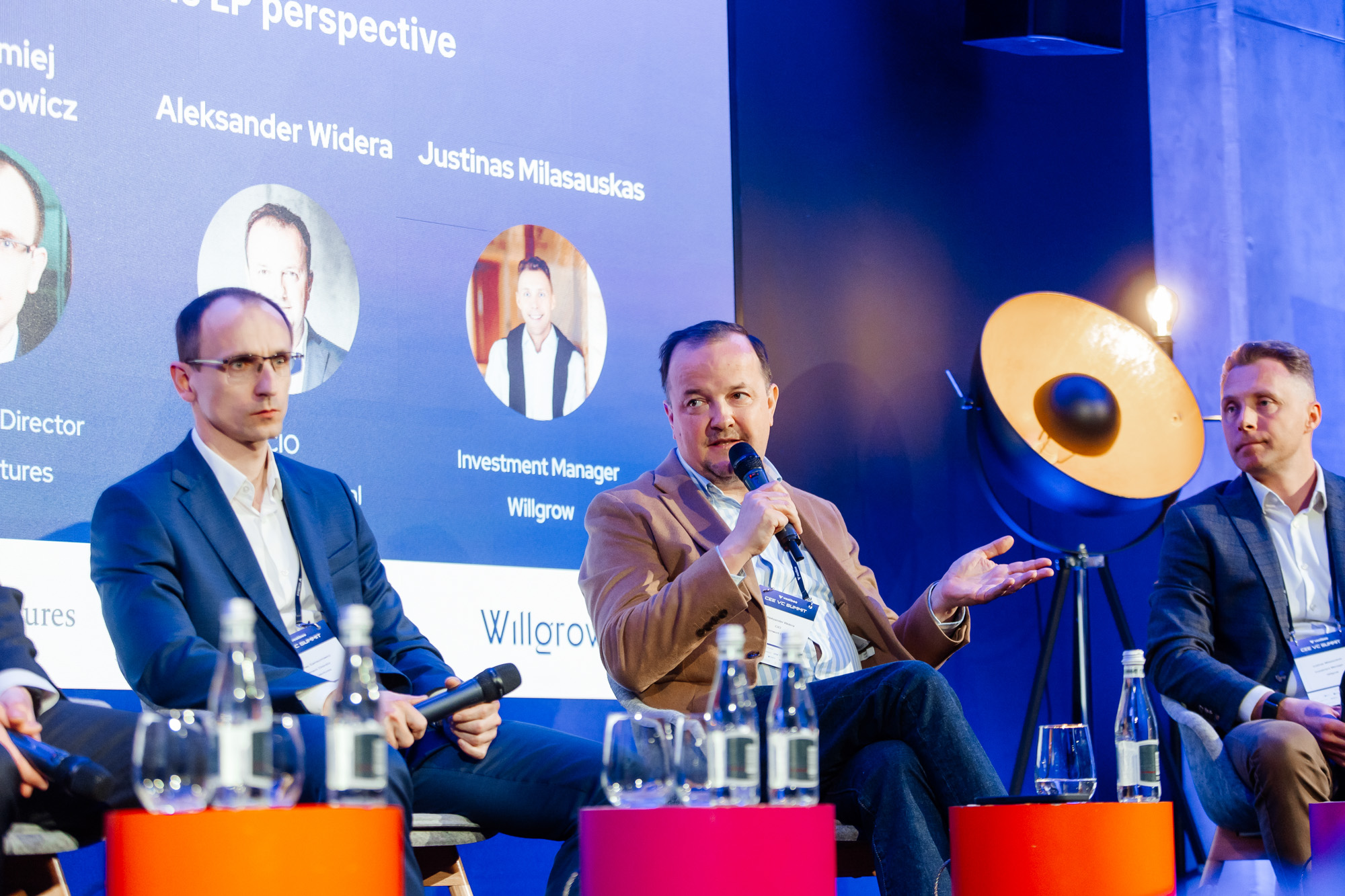
Justinas Milasauskas, Investment Manager at Willgrow, had the same concern. While state-backed capital makes sense for first-time and emerging managers, he questioned why more established funds sometimes continue to rely heavily on public money.
"When you see fund ones, maybe fund twos attracting state capital, that makes sense," he said. But when a fourth- or fifth-generation fund still depends on public investors as anchor LPs, "we try to understand why that is instead of private capital."
Most valuable KPI is strong relationships
DPI, TVPI, and the number of unicorns are inevitable metrics when we are speaking about accessing funds. Yet, the most fundamental factor in the venture world remains relationships. As Widera pointed out, backing a fund is ultimately a long-term commitment built on trust. "It's a relationship-building game," he said. "What have you put into your Excel? Six months at most."
The qualities he looks for are difficult to capture in a spreadsheet: commitment, honesty, how managers treat founders, and how they communicate when things go wrong. The key question, he argued, is not simply whether a team can raise a fund, but whether it can return capital.
Public LPs do not appear to think very differently. According to Kosina of EIF, the criteria used by institutional investors are largely aligned with those of private LPs, even if public organisations also have policy objectives to consider. One of them is that relationships should not exist only during fundraising. Staying in touch between fundraises, sharing updates, and building trust over time can matter just as much as performance metrics. As Samsonowicz of PFR Ventures said:
"We are not even counting how many funds we have in our portfolio; we count relationships that we have."
For an asset class built around decade-long partnerships, that may be one of the few KPIs that never goes out of style.
What is still missing
When asked what remains unresolved in the CEE venture ecosystem, liquidity entered the scene. "DPI doesn't work. That's obvious," said Milasauskas of Willgrow. For him, the question is not only about distributions, but whether the region can consistently demonstrate its ability to generate venture returns. Unicorns, startup creation, and paper valuations matter, but ultimately, LPs want evidence that capital can be returned and recycled back into the ecosystem.
But the challenge goes beyond exits. Another recurring theme was the limited pool of private capital participating in ventures across the region. Despite growing private wealth, venture capital remains a niche asset class. As Widera of Moonwort Capital noted, many wealthy individuals still view VC as "too risky and too complicated." In his view, the industry has yet to clearly communicate its value proposition beyond the startup and investment community.
Structural barriers and scale remain closely linked challenges for the region. According to EIF's Michał Kosina, Europe still faces cultural and regulatory constraints that limit institutional participation in venture capital. Pension funds, for example, remain significantly underrepresented despite recent regulatory progress in countries such as Croatia and the Czech Republic. At the same time, while the region has successfully produced a growing number of emerging managers, the next challenge is attracting larger pools of capital capable of supporting the ecosystem's continued development, emphasized Samsonowicz.
It seems that the CEE venture is no longer struggling to create funds or startups. The harder task now is building a system that can consistently return capital, attract private investors, and scale beyond its public funding roots.