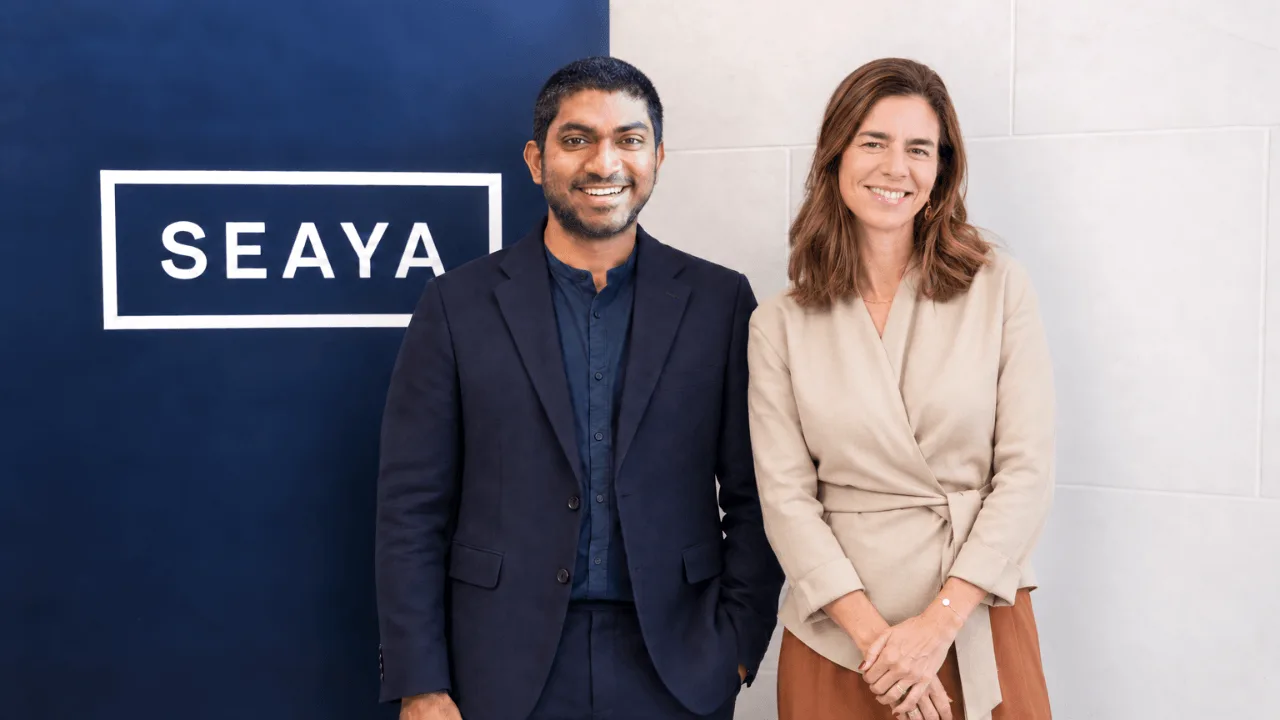
When Neko Health opened its first US clinic this September, more than 25,000 Americans had already joined the waiting list for its $500 preventative body scan. The Swedish startup, co-founded by Spotify's Daniel Ek, is already planning further expansion to Washington and San Francisco, financed by the $700 million Series C led by Lightspeed Venture Partners with participation from O.G. Venture Partners, Atomico, General Catalyst and Lakestar. The round pushed Neko Health's total funding to around $1 billion since its founding in 2018, making it one of Europe's best-funded healthcare startups.
According to Dealroom, the company accounts for roughly 85% of all disclosed venture funding invested in European longevity startups this year. Despite longevity becoming one of the fastest-growing consumer health trends globally, Europe has produced remarkably few venture-backed winners.
That raises an obvious question: if consumers on the other side of the Atlantic are readily embracing longevity, why hasn't Europe caught up and built a longevity startup ecosystem of its own?
Longevity: from wellness trend to investment category
Longevity is no longer a niche reserved for biohackers or Silicon Valley executives. It has become the newest growth engine of the global wellness economy by changing what consumers are actually buying. Traditional wellness promises immediate benefits: better sleep, more energy, or reduced stress, but longevity extends that promise into the future. A supplement, diagnostic scan, or fitness programme is no longer marketed as a way to feel better today, but as an investment in decades of healthier life.
It sits at the intersection of consumer wellness and healthcare, and its range is getting wider and wider: beauty companies increasingly position skincare as healthy ageing, sports brands focus on recovery and long-term performance, and even hospitality is embracing longevity retreats and preventative health experiences, positioning it as the appropriate form of travel for the conscious consumer of 2026.
This business wave is positioned against the backdrop of a wider social trend, as shown by NielsenIQ: nowadays customers are increasingly self-directed in managing their health, and rather than relying solely on healthcare providers, are actively seeking data, monitoring their own biomarkers, and choosing products based on measurable outcomes rather than brand loyalty. The global health and wellness market is projected to grow from $6.82 trillion in 2025 to $10.36 trillion by 2030, representing an 8.7% CAGR.
This consumer demand and unquestionable interest in “longevity” as part of a broader health content, however, has not yet translated into a mature European venture ecosystem.
Does a European longevity market exist?
If Neko is removed from the dataset, Europe's longevity ecosystem looks surprisingly thin — just 39 rounds in 2026, 9 of them early-stage, and less than 40% of them funded by VCs. The rest of the money came from grants, public markets, spinouts, M&A, property debt, and other forms of non-venture capital.
After Neko's $700 million Series C, the largest disclosed venture round belongs to IMU Biosciences at around £40 million. It is followed by Engitix ($25 million), ErVimmune (€17 million), Ahead Health ($10 million, after an earlier $6 million seed), Xsensio ($7 million), Calibre ($3.3 million), Loovi (€1 million), PredictMe (SEK 5 million) and several much smaller financings.
The picture becomes even less convincing when looking at how "longevity" is defined. Dealroom's longevity category contains 188 European companies and seven unicorns, yet many operate in areas such as metabolic disease, ophthalmology or rare disease therapeutics rather than preventing ageing itself. These are successful health-tech businesses, but they are not what most founders or investors would recognise as longevity companies.
Very few European startups are directly attempting to extend a healthy lifespan, but there are a few examples worth mentioning.
One of the clearest examples is Dublin-based Juvenescence. Founded in 2016, the company has raised roughly €310 million to develop therapies targeting the biology of ageing, including programmes focused on PAI-1 inhibition, GDF-15 and CD38, alongside a consumer nutrition business built around ketone esters. Interestingly, the largest growth check of the company came from Abu Dhabi's M42 (alongside other European and US-based investors).
Another successful example originating from Europe is Oura, founded in Finland, which has become one of the world's defining consumer longevity businesses, but its centre of gravity has shifted across the Atlantic. Now operating from both Oulu and San Francisco, the company filed for a Nasdaq listing in September after reporting more than $1.2 billion in revenue over the first nine months of the year. Its late-stage investors include ICONIQ Capital, Fidelity, Whale Rock and Atreides Management — all US institutions. Earlier European investors have largely exited through secondary sales, while American capital is financing the company's next phase of growth.
This is a recurring feature of European longevity. The earliest rounds are often financed locally, but once companies reach global scale, the largest cheques are typically written elsewhere.
Why hasn't longevity become a venture category in Europe?
America has produced multiple venture-backed longevity companies worth billions of dollars across diagnostics, consumer health and ageing biology, whilst Europe has produced one clear breakout company — Neko Health. Some successful examples from across the Atlantic include:
- Function Health, the Austin-based preventive-health platform, raised a $298 million Series B in late 2025 at a $2.5 billion valuation, backed by Redpoint Ventures alongside Andreessen Horowitz, Battery Ventures, Samsung Next and various celebrities and NBA players. Members pay $365 a year for access to more than 160 laboratory tests, while MRI and cardiac CT scans have become additional paid services.
- Further upstream, NewLimit, founded by Coinbase CEO Brian Armstrong, raised a $435 million Series C in 2026 at a valuation of roughly $3.1 billion despite remaining pre-clinical and pre-revenue. Armstrong himself committed $110 million to launch the company. Even more striking is Altos Labs, which raised $3 billion in a single financing round backed by ARCH Venture Partners, Jeff Bezos and Yuri Milner.
What separates a social trend from an investable category is whether that demand can be converted into recurring revenue at venture speed, and in Europe, some structural conditions get in the way.
- Universal healthcare
American consumers already pay directly for healthcare outside the insurance system, making preventive medicine a natural extension of existing spending habits. Paying $500 for a full-body scan or several hundred dollars for an annual diagnostic subscription fits within a healthcare market built around out-of-pocket expenditure. Someone in Munich, Warsaw or Copenhagen has already contributed to healthcare through taxation, and a private longevity clinic is not replacing existing spending but asking consumers to create an entirely new budget category. That difference could help explain why the largest American preventive-health platforms, including Function Health and Superpower, haven’t established meaningful European operations.
- Cultural differences
Much of America's consumer longevity boom emerged from self-experimentation rather than conventional medicine. Silicon Valley popularised peptide therapies, continuous health tracking and aggressive biomarker optimisation years before regulators or clinical evidence caught up. A New York Times investigation earlier this year documented technology executives routinely self-injecting experimental peptides purchased through suppliers marketing compounds for research purposes. US customs data suggests imports of peptide and hormone compounds from China nearly doubled during 2025.
Europe has no comparable grey-market ecosystem. Consumer health products generally face stricter oversight, health claims are more tightly regulated, and clinical providers operate within a more institutional framework. Additionally, science hasn’t fully caught up with this trend. Andrea LaCroix, professor at UC San Diego's Herbert Wertheim School of Public Health and Human Longevity Science, has argued that no clinical trial has yet demonstrated an intervention that reliably extends healthy human lifespan. Many of the products driving consumer enthusiasm — from red-light therapy and contrast therapy to cold plunges and infrared saunas — remain supported by limited evidence for their long-term claims.
- Capital allocation
European investors have demonstrated a strong appetite for life sciences, but much of that capital flows toward conventional pharmaceutical development rather than longevity itself. Zealand Pharma's obesity partnership with Roche included $1.65 billion upfront and up to $5.3 billion in milestone payments, while Verdiva Bio raised $411 million in what became the largest Series A ever completed by a UK or EU biotech.
Investors are clearly willing to finance ambitious science. They are simply directing capital towards therapeutic categories with established regulatory pathways, reimbursement models and exit opportunities instead of businesses organised around healthy ageing.
The question that remains is whether longevity will become a category in its own right, or whether Europe will continue producing scientific breakthroughs that are ultimately commercialised elsewhere, while the consumer market remains constrained by healthcare systems that already promise what longevity startups are trying to sell.